
The Method, Step by Step
-
- Pick one task to work on — a single, specific piece of work, not a general area like “email.”
- Set a timer for 25 minutes and work on only that task until it rings. No checking messages, no switching tasks.
- When the timer rings, stop — even mid-sentence — and take a 5-minute break away from the screen.
- Repeat three more times, then take a longer break of 20–30 minutes after the fourth pomodoro.
That’s the complete method. The rigidity is intentional — stopping at 25 minutes even when you’re in a groove, and actually taking the break instead of pushing through, are both part of what makes it work rather than incidental details to skip.
Why 25 Minutes Specifically
There’s nothing scientifically magic about the number 25 — Cirillo settled on it originally because that’s roughly how long the kitchen timer he happened to be using could be wound for, and it stuck because it turned out to hit a workable middle ground: long enough to make real progress on something, short enough that starting doesn’t feel like a big commitment. That second part matters more than people expect. A lot of procrastination isn’t about the task being hard — it’s about the task feeling open-ended. “Work on the report” has no edge to grab onto. “Work on the report for 25 minutes” does.
If 25 minutes genuinely doesn’t fit your work — some tasks need longer uninterrupted stretches to get into — the ratio matters more than the exact number. A 50-minute work block with a 10-minute break preserves the same roughly 5-to-1 work-to-break ratio and works fine for tasks that need more runway. What tends not to work is stretching the work interval without also stretching the break — that’s just working longer with worse-timed rest.
Why the Breaks Matter as Much as the Work Blocks
It’s tempting to treat the breaks as the optional part and the work blocks as the real technique. That’s backwards. The breaks are what keep the next work block effective — sustained, unbroken focus tends to degrade over time even when it doesn’t feel like it in the moment, and a short real break (standing up, looking away from the screen, not just switching to a different screen) is what resets that. Skipping breaks to “get more done” tends to produce more time at the desk but not more actual output, because the quality of focus in block four is worse than block one if there’s been no recovery in between.
The longer break after four pomodoros exists for the same reason at a bigger scale — roughly two hours of focused work is a natural point where a longer reset genuinely helps, rather than just being an arbitrary checkpoint.
Common Mistakes That Undercut the Technique
-
-
- Working through the timer. Ignoring the bell because you’re “almost done” defeats the purpose — the stopping point is what protects the next block, and finishing the thought after a 5-minute break usually costs less than it feels like it will.
- Spending the break on another screen. Scrolling a phone during the break isn’t rest for the same attention system that was just working — it’s a different kind of stimulation, not recovery. A break that involves standing up, stretching, or looking out a window tends to leave people more ready for the next block.
- Picking a vague task. “Work on the project” doesn’t give a pomodoro anything concrete to measure progress against. “Draft the introduction section” does. The more specific the task, the easier it is to tell whether a 25-minute block actually moved it forward.
- Treating an interruption as a failure instead of just logging it. Cirillo’s original method includes tracking interruptions rather than pretending they don’t happen — if something urgent breaks a pomodoro, note it and either restart the interval or continue, rather than abandoning the technique entirely because one block got interrupted.
-
Who It Tends to Help Most
The Pomodoro Technique tends to help most with work that’s easy to procrastinate on precisely because it’s open-ended — writing, studying, cleaning up code, anything without a natural stopping point. It’s less necessary for work that already has built-in structure, like a scheduled meeting or a task with a hard external deadline forcing focus anyway. It’s also commonly used alongside a broader task-management system rather than replacing one — the technique controls how you work inside a block of time, not what goes on your list in the first place. Pairing it with a to-do list to decide what to work on next, or a habit tracker to keep the practice consistent day to day, covers the planning side that Pomodoro itself doesn’t handle.
Adapting It Without Losing What Makes It Work
-
-
-
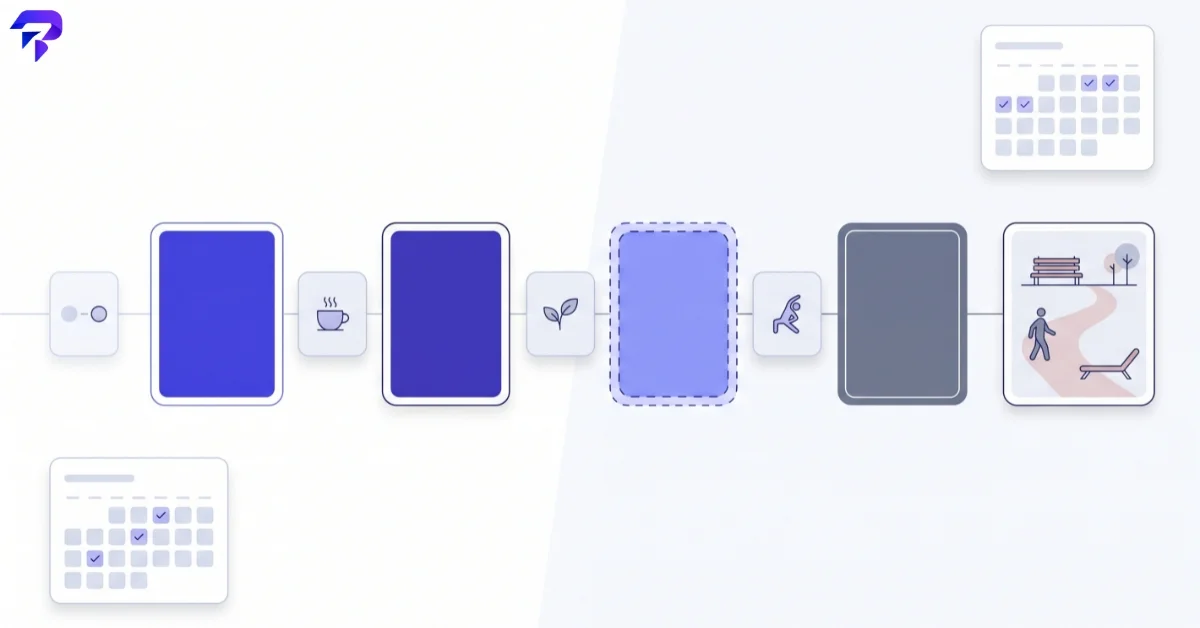
- Deep, hard-to-restart work (complex writing, difficult debugging) often does better with longer blocks — try 50/10 instead of 25/5, but keep a real break in place.
- Shallow, high-volume tasks (inbox cleanup, small edits, admin work) often do fine at 25/5 or can even go shorter, since the task itself doesn’t demand deep sustained focus.
- Writing or focused deep work pairs naturally with a distraction-free environment during the work block itself — ToolPremier’s distraction-free writer removes the rest of the interface so the timer isn’t competing with notifications and open tabs.
- If you’re building the habit, start with a smaller daily commitment — even 2–3 pomodoros a day, done consistently, builds the habit faster than an ambitious 8-pomodoro day that gets abandoned after a week.
-
-
For plain timing without the built-in Pomodoro structure — timing a single task, or running a stopwatch for something unrelated to focus work — ToolPremier’s online stopwatch and countdown timer cover those simpler cases.
FAQs
Is there actual research behind the Pomodoro Technique, or is it just a popular habit?
It’s best described as a popularized method rather than a clinically validated protocol — Cirillo developed it from personal experimentation, not a research study, and there’s no large body of peer-reviewed trials testing “Pomodoro” by name. That said, its two core ideas — that sustained attention degrades over time and that short breaks restore it — line up with broader, well-established research on attention fatigue and the benefit of periodic rest during focused work. Treat it as a practical framework built on sound general principles, not a scientifically proven exact formula of 25 and 5.
Can Pomodoro work for team or collaborative tasks, or is it strictly a solo technique?
It’s designed around individual focus, but some teams adapt it for shared work — a “mob programming” or pair-writing session can run on a synchronized timer, with everyone taking the break together. It works less well for anything requiring real-time back-and-forth communication, since stopping mid-conversation for a break defeats the point of the conversation. It’s most naturally a solo tool, occasionally borrowed for structured pair work, not a replacement for how a team coordinates in general.
My job requires me to stay interruptible (support, on-call, reception) — can Pomodoro still help?
The strict version, where you ignore everything for 25 minutes, doesn’t fit a role where being reachable is the job. It can still help for the portions of the role that do involve focused, interruptible-in-an-emergency-only work — use it during scheduled deep-work blocks (report writing, planning, documentation) rather than trying to apply it across an entire shift where interruption is the expected norm, not the exception.
Is there a maximum number of pomodoros I should do in one day?
There’s no fixed ceiling in the method itself, but there’s a practical one: focus quality drops as the day goes on, so cramming in as many pomodoros as physically possible tends to produce diminishing returns rather than proportionally more output. Most people find a sustainable number well below what looks impressive on paper — somewhere in the range of 8–12 for a full workday is common, but the right number is whatever you can sustain daily without burning out, not a target to hit for its own sake.
The Bottom Line
The Pomodoro Technique works less because of anything special about the number 25 and more because it turns open-ended work into a series of small, concrete commitments, with breaks that are actually part of the method rather than an interruption to it. The most common way people undercut it is working through the bell or spending the break on another screen — both quietly erode the thing that made the technique effective in the first place. Start with the standard 25/5 structure, adjust the ratio if a specific kind of work genuinely needs it, and let ToolPremier’s Pomodoro timer handle the counting so the only thing you have to manage is the work itself.