How a browser actually generates a “random” result
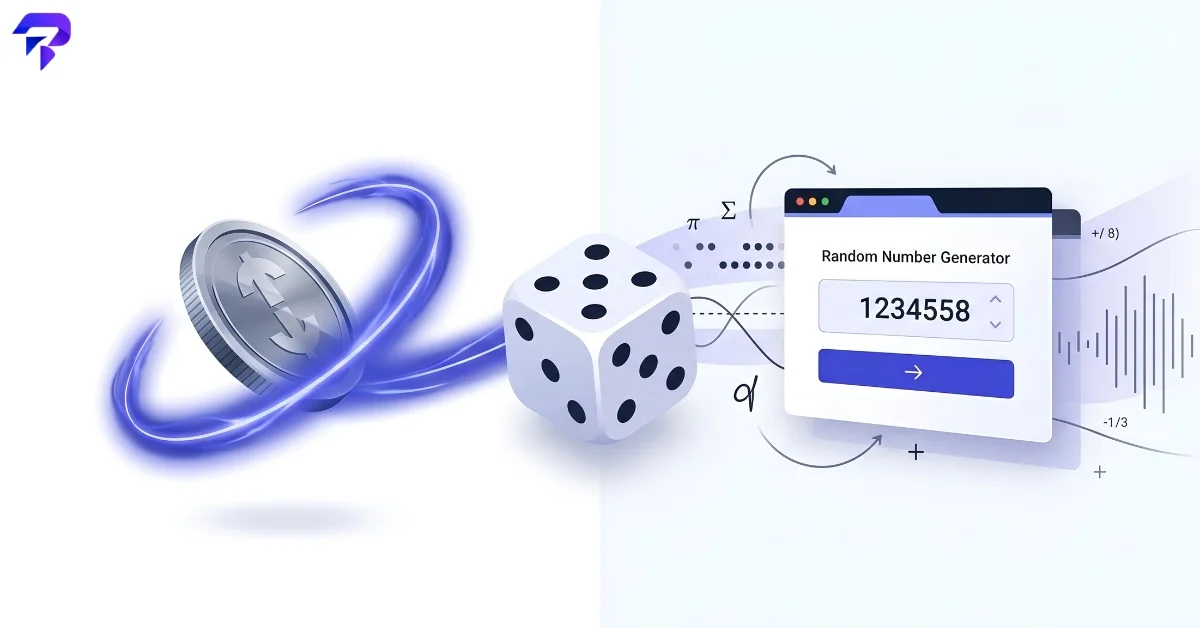
Nothing in software is truly random unless it pulls from physical entropy (things like atmospheric noise or hardware timing jitter). What websites use instead is a pseudorandom number generator: an algorithm that starts from a seed value and produces a long sequence of numbers that looks statistically random even though it’s fully deterministic.
In JavaScript, the standard Math.random() function is a fast, non-cryptographic PRNG. Modern browser engines (V8, which powers Chrome and Edge, is a well-documented example) implement it with algorithms like xorshift128+ — fast, good statistical distribution, but predictable if someone can observe enough outputs. That predictability doesn’t matter for a coin flip or a dice game. It matters a lot if you’re generating something like a password or an encryption key, which is why the Web Crypto API offers a separate function, crypto.getRandomValues(), specifically designed to be cryptographically unpredictable.
So the short version: coin flips, dice rolls, and casual number generators use the fast kind of random. Anything protecting an account or a secret should use the cryptographic kind.
Coin flip vs. dice roll vs. number generator — when to use which
These three tools cover overlapping but distinct needs:
Coin flip is the simplest binary decision — heads or tails, yes or no, this or that. Use it when you genuinely have two equally weighted options and just want to remove yourself from the decision.
Dice roller extends that to more outcomes and supports the actual mechanics tabletop games need — multiple dice, different sided dice (d4, d6, d20, and so on), and rolling several at once.
Random number generator is the general-purpose version: pick any range, get a number back. It’s what you reach for outside of a game context — assigning raffle numbers, picking a sample for testing, or generating a numeric ID.
Is “random” online actually fair?
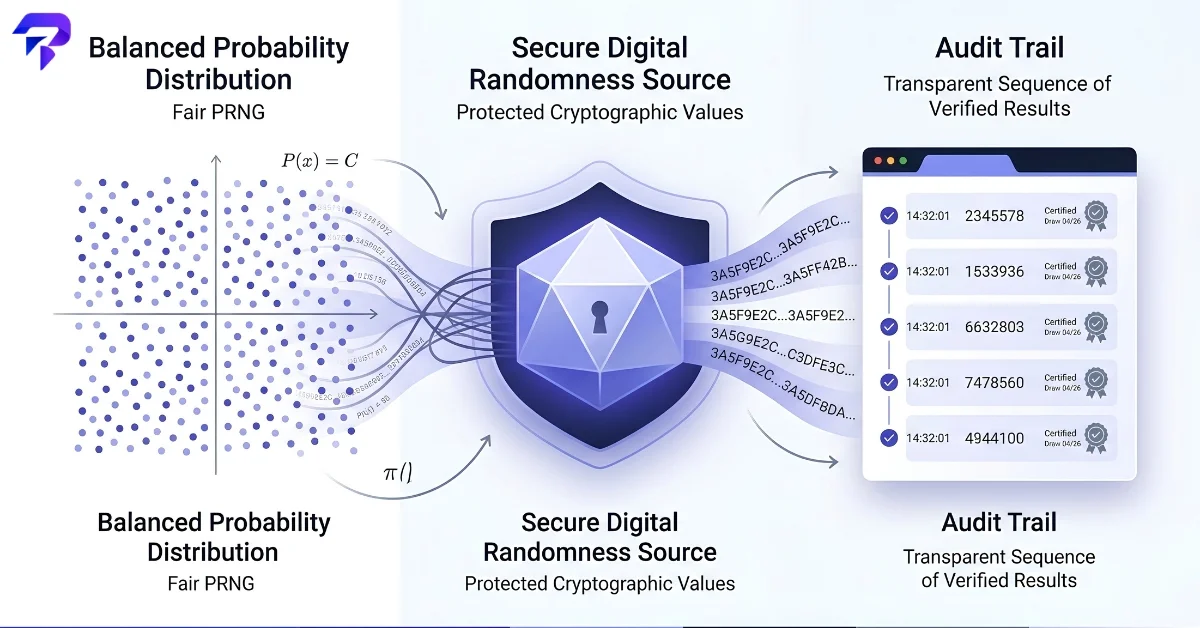
For everyday purposes, yes. A well-implemented PRNG produces a uniform distribution — every outcome in the range has an equal chance of appearing — which is what “fair” means for a coin flip or dice roll. What it isn’t is tamper-proof or audit-grade. If you need provable fairness for something with real money or legal stakes (a licensed lottery draw, a regulated raffle), that requires certified random number generation with an audit trail, which is a different category of tool entirely from a free browser-based generator.
When you need more than a single random pick
Once you’re choosing between named options rather than numbers, a few other tools take over. Spin the wheel lets you enter custom options and get a visual, weighted-or-unweighted pick — useful for group decisions or giveaways where you want the reveal to feel like an event. Random name generator does something similar when you’re pulling a name from a list rather than a number from a range. If your goal is specifically picking a winner from a list of entries fairly, our guide to picking a random winner online covers that process in more detail.
FAQ
Can two people get the same “random” result at the exact same time?
Yes, easily. Each browser session generates its own sequence independently, so simultaneous coin flips or rolls on different devices aren’t linked to each other in any way — matching results are just coincidence, the same as two people flipping physical coins at once.
Is Math.random() secure enough to generate a password?
No. Because it’s a non-cryptographic PRNG, its output can theoretically be predicted by an attacker who has seen enough prior values. A proper password generator uses a cryptographically secure random source. See our guide to generating a strong password for what to actually look for.
Does adding more sides or digits make a generator “more random”?
No — it changes the size of the range, not the quality of the randomness. A fair 6-sided die and a fair 100-sided die are equally “random” in the statistical sense; there are just more possible outcomes on the larger one.
The bottom line
Coin flips, dice rolls, and number generators are all pseudorandom under the hood — genuinely fair and unpredictable enough for games, decisions, and giveaways, but not a substitute for cryptographically secure randomness when security is actually on the line. Pick the tool that matches your range of outcomes, and reach for a dedicated security tool when the stakes go beyond a casual pick.